
Our Journey To Timelessness

“The Invisible Everywhere movie: Great supplement to your book! I'm recommending to everyone!”
Tom P.
The Invisible Everywhere: Believing Is Seeing presents the modern scientific evidence that shattered my lifelong atheism and opened my eyes to the existence of God.
👉 Get Your “Ultimate Expedition” Ticket Now & Start Watching!👈

Mrs. G and I are not part of a large organization; its just the two of us working hard to serve the God we love. So please consider becoming a Paid or Founding Subscriber. By doing so you’ll not just benefit from these weekly letters, you’ll actually support them and our efforts to speak truth with love to a world sorely in need of both.
Thank you and God bless you.
Time & Religion
When I was a grad student at Cornell I realized science was not going to be able to answer all my questions about the universe and my place in it. That’s when I - a tormented intellectual in search of deep truths - embarked on what I call my Hermann Hesse scientific-spiritual journey.
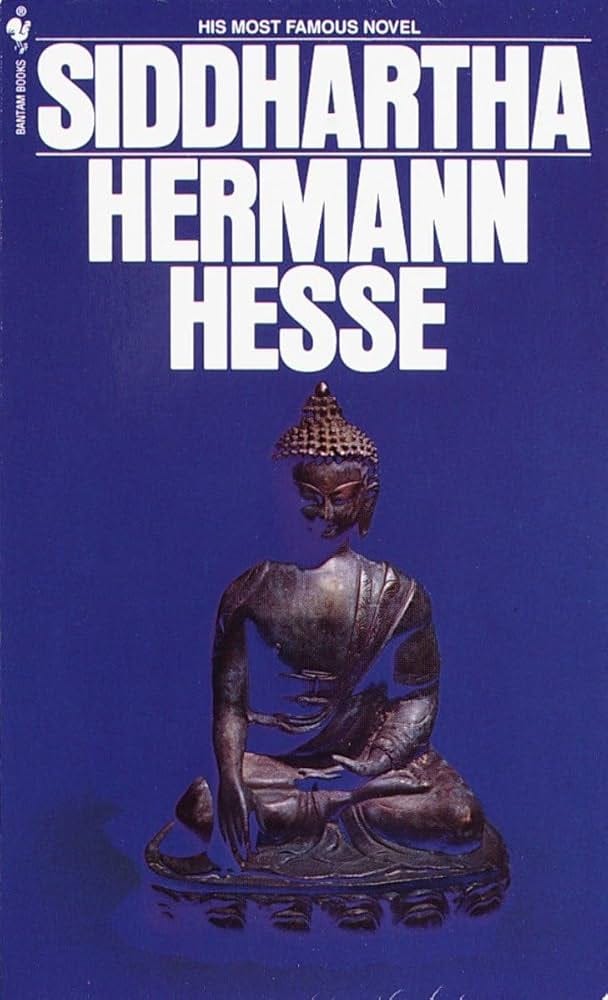
Along the way I explored the world’s major religions and then some, starting with Hinduism and ending (grudgingly) with Christianity. I recount the journey in my book Believing Is Seeing and partly so in my new movie The Invisible Everywhere.
On that long, winding, adventurous journey, I made many astonishing discoveries, one of them being the role of time in the various belief systems.
Generally speaking, time plays a minor role in most Eastern religions: their narratives tend to be atemporal. But not so the Abrahamic religions - Judaism, Christianity, and Islam - whose narratives are far more emphatically and verifiably historical.
What’s more, among those three religions, I discovered time plays the most prominent and portentous role in Christianity. In fact, the Christian concept of time was so progressive, it predated even science’s current conception of time.
Here are three examples of what I mean.
I. Linear Time
Eastern religions see time as cyclical - for example, what Hinduism, Buddhism, and Jainism call Samsara. According to these worldviews, each of us is trapped inside a hamster wheel cycling through repeated iterations of birth, life, death, and rebirth - until, after great effort over many lifetimes, we’re finally able to escape and enter some kind of paradise.
Christianity was the first and only religion in human history to have a purely and completely linear timeline, hence its popular description as “The Greatest Story Ever Told.”
“With Christianity, man acquired a new understanding of time. In the ancient world history was viewed as a series of repeating cycles, but the Christian view of history was linear and progressive, based on a unique sequence of events … that could never be repeated.”
G. J. Whitrow, British mathematician & historian of science
Time In History: Views of Time From Prehistory to the Present Day
Like any good modern-day story, the Christian worldview has a well-defined beginning, middle, and end.
The beginning is Christ’s birth.
The middle is Christ’s life, death, and resurrection.
The end is Christ’s Second Coming.
“Then the end will come, when he hands over the kingdom to God the Father after he has destroyed all dominion, authority and power. … When he has done this, then the Son himself will be made subject to him who put everything under him, so that God may be all in all.”
1 Corinthians 15:24, 28
Christianity’s view of time was so novel and compelling that science eventually adopted and adapted it for itself.
“The linear view of time as continual progression without cyclical repetition finally prevailed through the influence of the nineteenth-century biological evolutionists. The Darwinian theory of biological evolution ... was the decisive factor that caused men to take time seriously.”
G.J. Whitrow
Before then, Aristotle - the grandfather of science - saw time as cyclical, repeating every 12,960 years (Annus Maximus). Today, the modern scientific worldview - like the Christian worldview - is solidly based on linear time, not a wheel of time.

II. Relative Time
According to 18th-century classical physics, time was defined by a single universal clock. Everything, everywhere - galaxies, stars, planets, people - kept time at exactly the same rate: tick … tick … tick … tick …
In 1905, however, Einstein’s special theory of relativity opened our eyes to a truth that is now a pillar of modern science, namely: Our reckoning of time depends on our particular speed and weight. The faster we move and the stronger gravity pulls on us, the slower time appears to flow: tick ………. tick ………. tick ………. tick ……….
For instance, someone living on a mountaintop - farther from Earth’s gravity - ages faster than someone living at sea level. Your head - because it’s farther from Earth’s gravity - ages faster than your feet. And so forth.
This revelation rocked 20th-century science to its core. Yet, once again, Christianity anticipated science because way before Einstein’s 1905 theory was ever published, Scripture spoke about the elasticity of time.
“But do not overlook this one fact, beloved, that with the Lord one day is as a thousand years, and a thousand years as one day.”
2 Peter 3:8