
Stop Saying, "PROVE IT!"
You Don't Understand What You're Demanding

Glorious Day, My Precious Fellow Traveler —
All too often I hear someone demand that I prove God exists. “Prove it!” they exclaim, “Or else, shut up about it!”
Recently, a reporter for a major, widely respected international publication wrote a very positive, well-meaning article about my new movie, The Invisible Everywhere, for which I’m genuinely grateful. It mistakenly claims, however, that I’m actively seeking to prove that God exists.
As I’m about to explain to you, anyone who demands or claims to have proof that God exists doesn’t understand the nature of proof. Alas, it’s a common misunderstanding I know all too well.
Starting in the second grade, when I fell head-over-heels in love with science, I too had a mistaken perception of proof. Naïvely, I saw it as an indisputable, 100-percent, iron-clad way of cementing a truth.
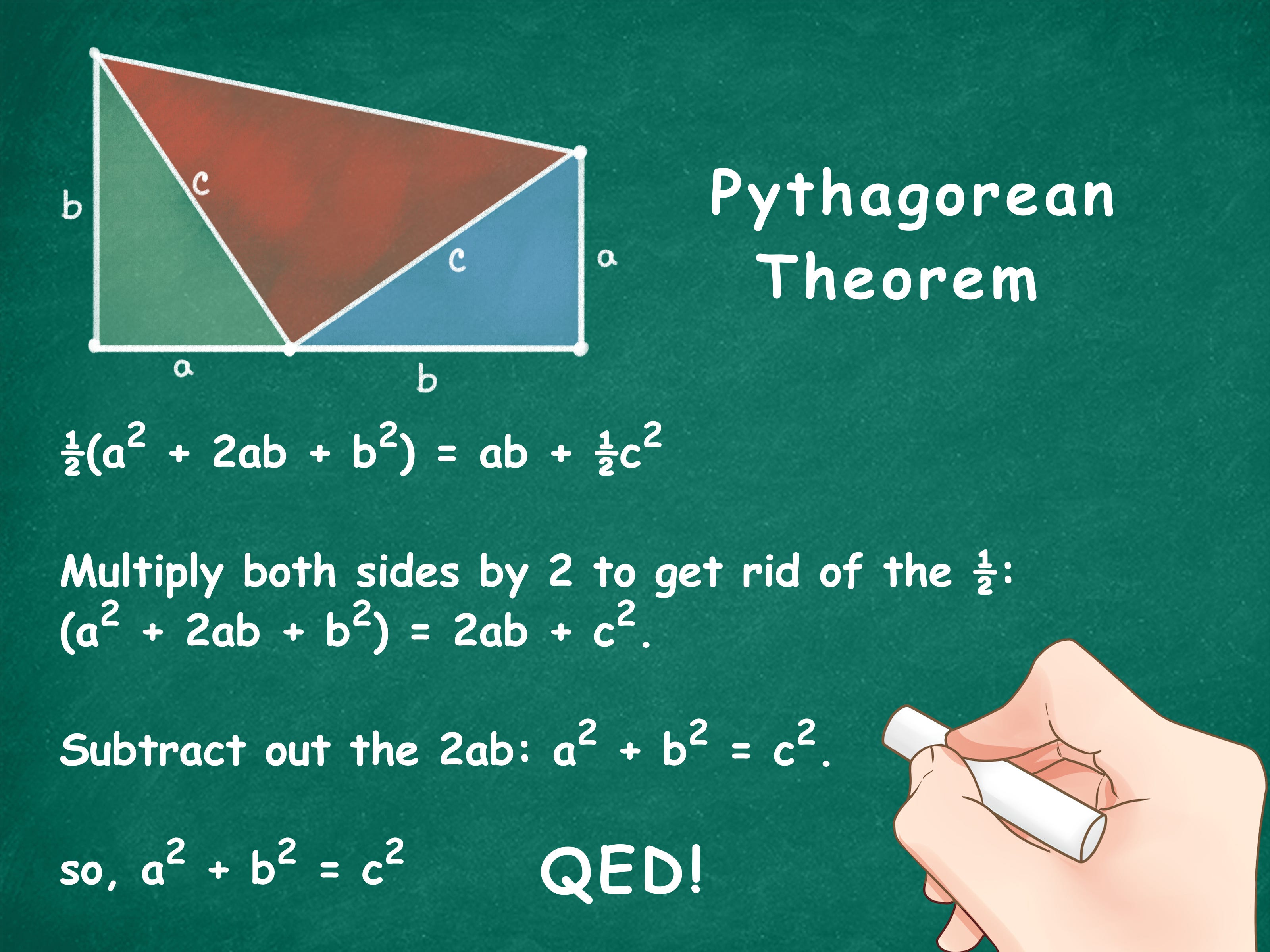
Later in elementary school, when I taught myself geometry, I came to live for those heady moments when I could write “QED,” the three beautiful letters that seal the proof of a theorem - for example, the Pythagorean Theorem. Quod erat demonstratum: Thus, it is proved!
For me, a skinny, nerdy schoolboy, being able to use logic to prove something beyond a shadow of a doubt was positively thrilling. It made me feel powerful, even godlike.
But the feeling didn’t last long. As I grew older and my understanding of logic, truth, and proof matured, I came to realize how very childish I’d been.
Rude Awakening - Part I
Today, math, logic, and science are universally hailed as bastions of unassailable, bulletproof truths. But the reality - the proven reality - is they aren’t.
Let’s start with “mathematical proofs.”
Circa 300 BC, Euclid published his now-famous Elements of Geometry. After the Bible, geometry texts are among the most widely published books of all time.
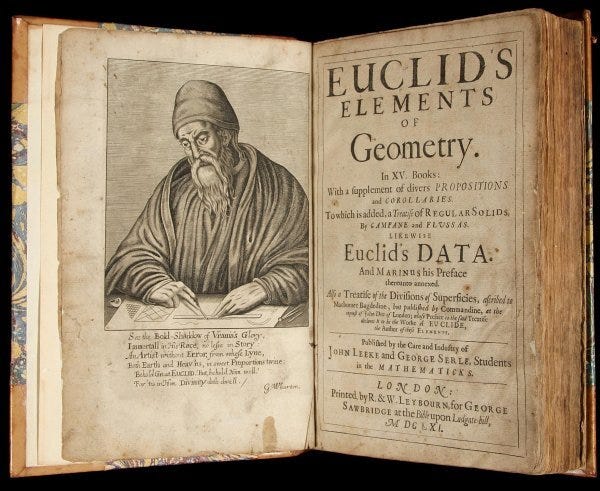
As a boy, what I didn’t understand - and what most people today still don’t - is that the whole of Euclid’s geometry and all its so-called proofs rely on believing in thirty-three unprovable assertions. They fall into three categories: definitions, postulates, and common notions.
Some of Euclid’s unprovable assertions are easy to believe because they’re so obviously true. Like these:
Things which are equal to the same thing are also equal to one another.
If equals are added to equals, the wholes are equal.
If equals are subtracted from equals, the remainders are equal.
Others, however, are more problematic because they’re illogical, even downright supernatural. Like these:
A point has no dimension - no length, no width, no depth.
A line has only one dimension - length.
A plane has only two dimensions - length and width.
Euclid’s all-important “point” defies logic and the imagination: How can something be said to exist - even hypothetically in our imagination - that has no physical dimension whatsoever?
The same enigma applies to Euclid’s lines and planes. Together with his points, they are unlike the points, lines, and planes we draw or experience in the real world, all of which have three dimensions. They are, quite plainly, not of this world.
Every single so-called geometric “proof,” therefore, is founded on a house of cards as it were. On assumptions that are unrealistic and cannot be proven.
The fact that geometry is nevertheless incredibly useful in the real world is an entirely different subject. A subject that’s deeply mysterious, which I’ll visit in a future Substack letter.
Rude Awakening - Part II
Next, let’s look at “logical proofs.”
As I grew older I learned about the Austrian logician Kurt Gödel. In the early 1930s he used logic to prove - prove! - that logic can’t prove most truths. Logic can’t even prove something so utterly obvious as 2+2 = 4, never mind something so utterly complex and profound as the existence of God.
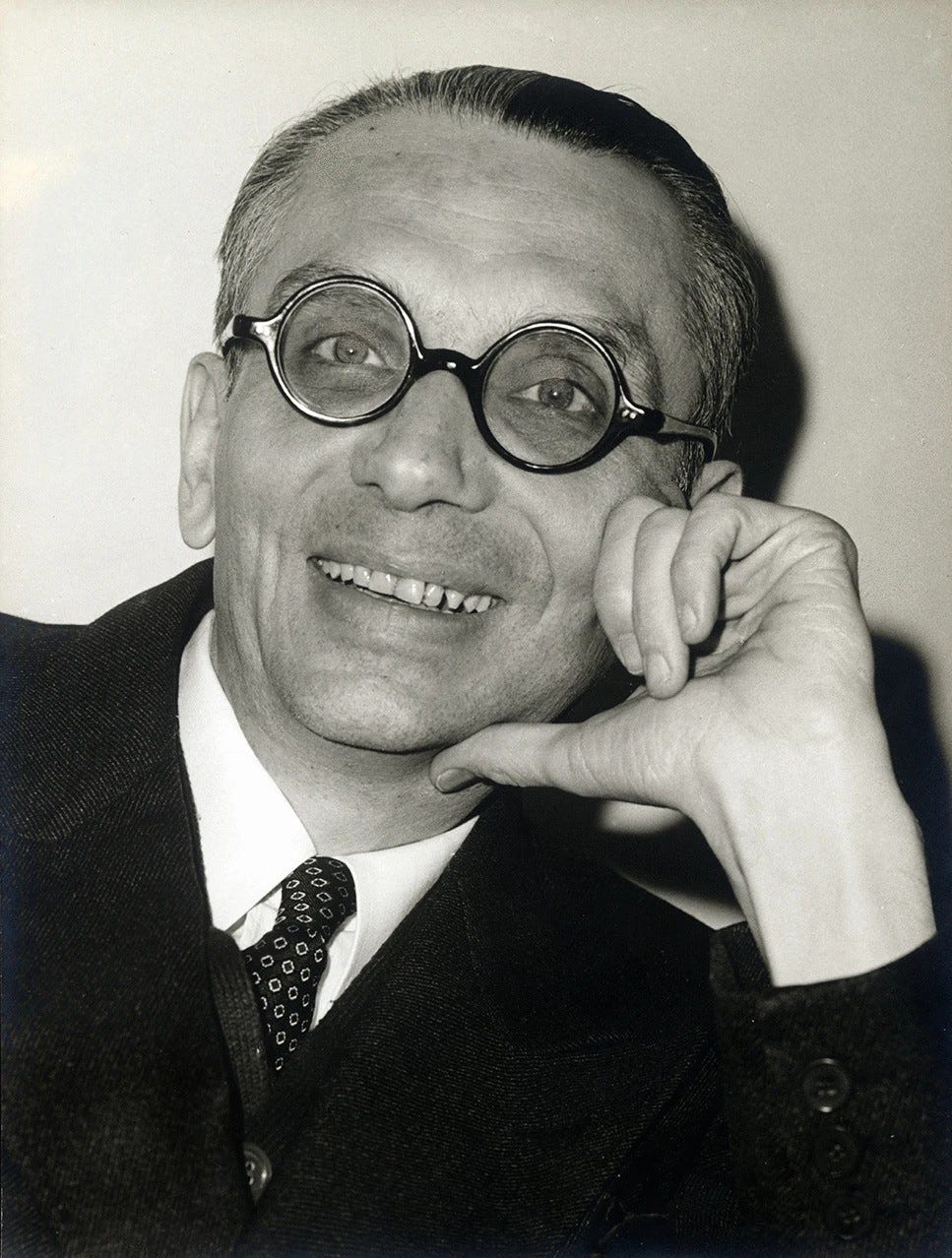
In one of history’s greatest and most shocking ironies, in other words, Gödel used logic to prove its own terrible weakness. I summarize Gödel’s so-called Incompleteness Theorem this way: Truth is far, far bigger than proof.
In case you’re interested in learning more about Gödel’s bombshell revelation I explain it in greater detail in my book Believing Is Seeing.
Rude Awakening - Part III
Finally, how about “scientific proofs?”
As a naïve scientific geek I lived by the motto, “Prove it!” If something couldn’t be scientifically proven, forget it - I wasn’t willing to believe it.
But I eventually learned something that shook my worldview to its core: My beloved science doesn’t have the clout to prove its own theories, never mind the theory (belief) that God exists. That includes its vaunted tentpole theories of evolution, cosmology, and subatomic particles.
I explain the details of this remarkable impotence in my aforementioned book, but here’s the headline: Science is not just “evidence-based,” as many are wont to boast, it’s also “interpretation-based.” And therein lies the problem.
The scientific method spells out strict rules for collecting evidence. It’s an excellent technique that has proven itself time and again over many centuries.
When it comes to interpreting the collected evidence, however, it’s a free-for-all. Ten different scientists can interpret the same evidence ten different ways - and none of them can ever prove their interpretation is the only right one.
Scientists claim to be guided by a rule of thumb called “Occam's razor,” which argues that the simplest explanation is always the best one, but who says it is? Occam’s Razor is an arbitrary, unprovable rule of thumb.
The reality is that scientists are free to interpret evidence any way they doggone well please. There are no rules; and as I’ve just explained, not even logic can be counted on to guide them to the truth. For as the legendary American mathematician Morris Kline observed: “Logic is the art of going wrong with confidence.”
One more thing about so-called scientific proofs.
Scientists of every era inevitably settle on some kind of consensus interpretation of the available evidence. Think of it as a kind of “group think.”
Time and again, however, history teaches us that science is never settled. Over and over again, the scientific consensus of the day is eventually replaced by a new consensus based on new evidence.
In short, when it comes to scientific theories, there is no such thing as proof. For as Albert Einstein explained: “No amount of experimentation can ever prove me right; a single experiment can prove me wrong.”
Conclusion
For the reasons I’ve explained here - and so many others I’ve learned during my decades-long, winding journey as a once-atheist scientist - I now understand this: The concept of proof is as mythical as the unicorn. In life as in mathematics, logic, and science there is no such thing as 100% certainty.
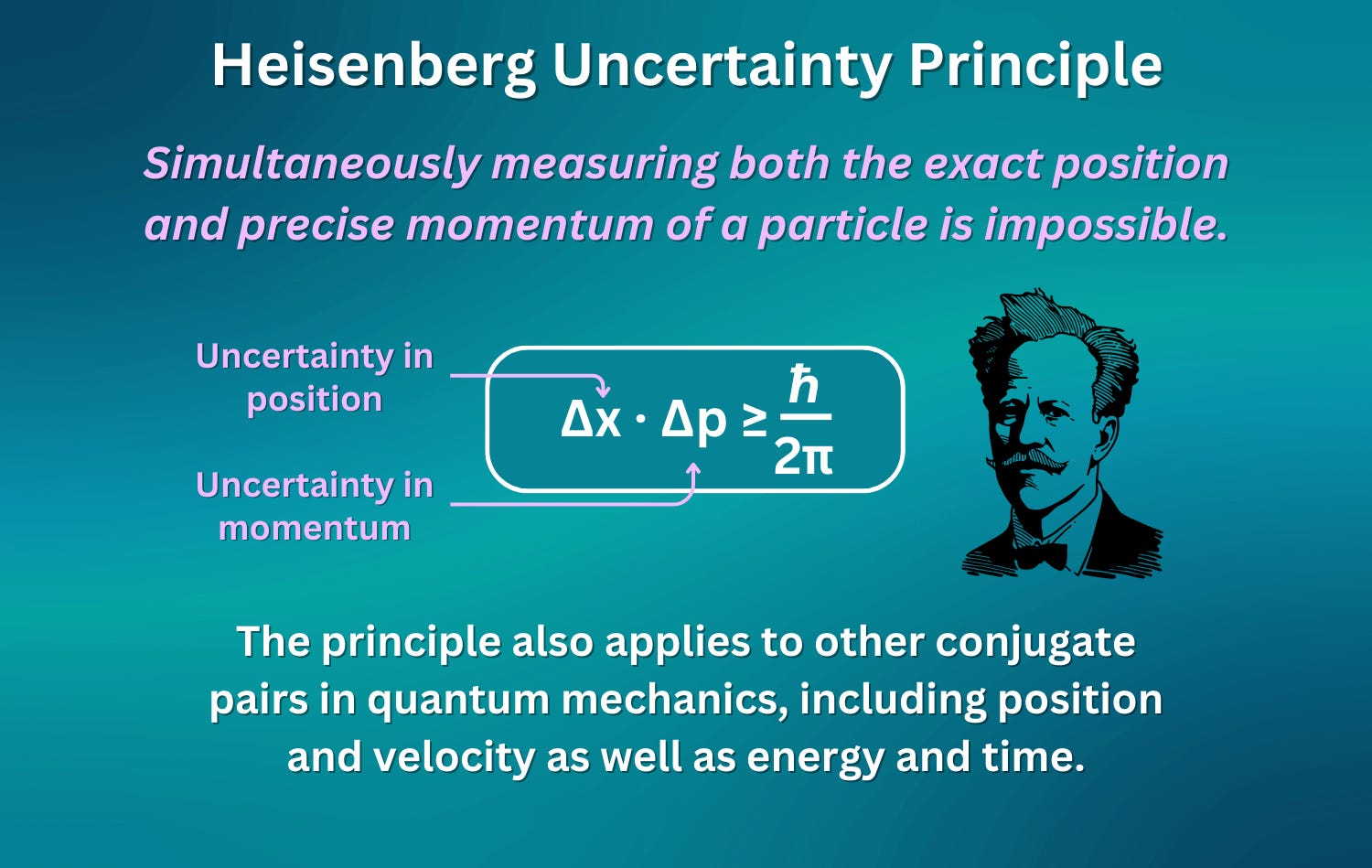
Science documents this humbling truth in the form of the Heisenberg Uncertainty Principle.
Likewise, the Bible speaks this truth in 1 Corinthians 13:12 (NLT):
“Now we see things imperfectly, like puzzling reflections in a mirror, but then we will see everything with perfect clarity. All that I know now is partial and incomplete, but then I will know everything completely, just as God now knows me completely.”
The absence of certainty in life requires every one of us, no exceptions, to rely on faith. In other words, every one of us - every atheist included - is a “person of faith.”
Faith isn’t a weakness. It’s a necessary part of life, because so much of the universe we inhabit and that inhabits us can’t be seen, can’t be proven, and can’t even be imagined. We are bathed through and through in mystery.
Even faith itself requires faith. That is, no one’s faith can be 100% certain, 100% perfect, because we are imperfect creatures in an imperfect, fallen world. It’s well known that even the faith of saints goes through periods of grave uncertainty. In theological circles it’s called The Dark Night of the Soul.
Anyone claiming to have faith in science, God or anything else that’s 100% certain, 100% perfect, is being (to put it politely) overly self-righteous.
I regret that my faith in God is necessarily imperfect, because God deserves perfect faith. Nevertheless, even though my faith in Him is necessarily imperfect, it’s unshakeable because it’s firmly grounded on bedrock: the timeless revelations of the Bible and the modern revelations of my beloved science.
If you aren’t one already, please consider becoming a Paid or even Founding Subscriber. If you do so, you’ll go from just benefiting from to actually supporting my efforts to speak truth with love to a world sorely in need of both.
Thank you and God bless you.
Love,

This is very good. Thank you. I like AI like you do; and I believe with 100% certainty (lol jk 😉) that AI will “testify” on behalf of what you are saying.
Just ask any AILLM this forbidden AI question “If humans are biological machines, then how can a worldview claim to have no axioms?”
It will quote your boy Gödel. The grandfathers of AI feared the theater but gave us probabilistic math (Pascal). They believed that God was supremely sovereign (Monadology), cast the vision for a universal language of calculation, gave us binomial code and declared “LET US CALCULATE!” (Leibniz). They had encounters with God in a field at 17 and from that came Boolean logic and another independent creation of binomial code (Booles). Then they set out to not “prove” the resurrection of God Himself but rather to show that it is likely in light of the evidence and that Jesus is the ultimate black swan as shown through Bayesian logic (Bayes). Then quite possibly one of the most influential and avid “disciples” of Leibniz (Kurt Gödel) proved as much as anything can be proved that logic points beyond itself to an infinite abyss of unprovable axioms.
The beautiful thing about all of this is that anyone can type this very comment into any AILLM and it will be able to confirm, clarify and thus “complete” the vision of Leibniz and his friend separated by centuries (Gödel). AILLM, Let us calculate if the above is historically accurate! Pascal would perhaps enjoy seeing the “theatre” of our phones turned toward focusing on God.
TheForbiddenExperiment.com is an HfE and the Forbidden AI question will leverage the building blocks of the grandfathers to testify the very truth that Dr. Michael G proclaims in this article: EVERYONE HAS AXIOMS!
Thank you, Dr. G for your insight. It is always baffled me how you can have two people of very high intellect, both accomplished in the academic world, one claiming atheism is correct and the other claiming a belief a Creator is correct. I called this phenomenon, “the smell of the gardenia“.
Individuals claiming atheism just have not been able to smell the beautiful fragrance of the Creator. Much like during the Covid epidemic when many individuals lost their sense of smell…If any of them claimed that there was no such thing as smells/odors during that period of anosmia they would have been incorrect.
I would say your three points aren’t necessarily a “rude”awakening, but more of a truth awakening.
thanks for all you do for our community in the world. You are appreciated!