
Why I Don't Believe In Karma

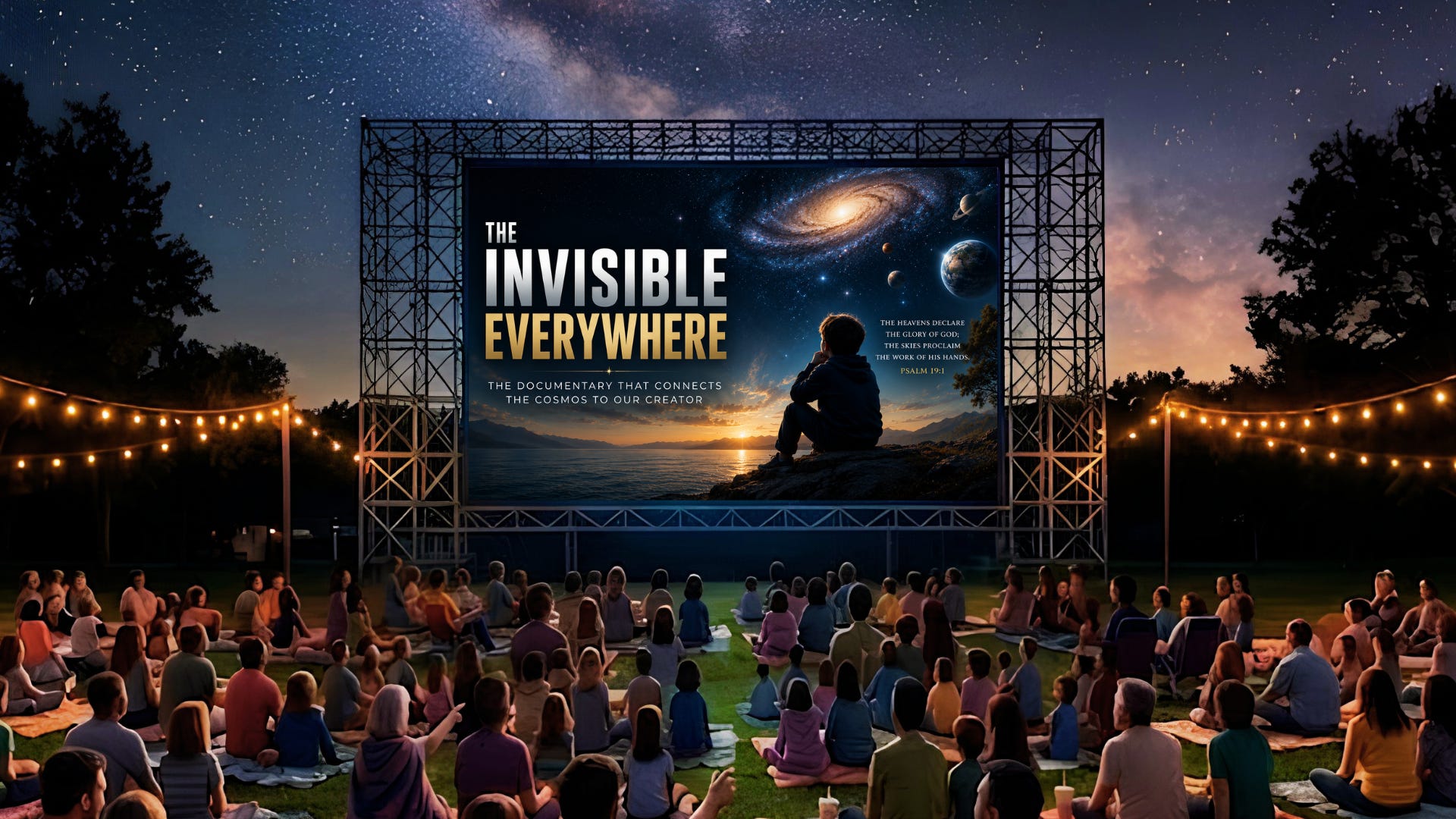
The Invisible Everywhere: the story of how modern science shattered my atheism & opened my eyes to the existence of God.
👉 WATCH NOW!👈
Please consider becoming a Paid Subscriber. By doing so you’ll support my efforts to speak truth with love to a world sorely in need of both.
Thank you and God bless you.
Modern Western Karma
“You’d better watch out, karma will get you!” These days we hear some version of that warning all the time.
A rude customer berates a waitress, then walks outside and discovers his car has been towed. “Karma!”
A dishonest politician gets caught in his own web of lies. “Karma!”
Someone posts an obnoxious comment on social media and, moments later, accidentally spills coffee all over her laptop. “Karma!”
In today’s Western patchwork culture, karma implies the existence of a cosmic referee: Do something bad and the “universe” will whack you upside the head. Do something good and the “universe” will reward you with a better job, a convenient parking space, or an unexpected check in the mail.
It’s the moral companion to Newton’s Third Law of Motion: For every action there is an equal and opposite reaction.
But that’s not what karma originally meant and still means in most of today’s Eastern religions.
Traditional Eastern Karma
In many Eastern religious traditions, karma means something more than an immediate consequence of our behavior. It’s a moral, cause-and-effect principle that extends well beyond a single lifetime.
In many versions of Hinduism, for example, karma is like a chit you earn whenever your actions line up with dharma, the right way to live. The amount of karma you accumulate in a lifetime helps determine the form and nature of your next life, your next incarnation.
Too little accumulated karma and you’ll possibly return as a snake crawling on its belly - or worse, a static rock. Lots of accumulated karma and you’ll return a wiser person than your former incarnation. Earn enough karma and bingo! you’ll escape samsara - the imprisoning cycle of life and death - and attain moksha - true and complete liberation.
This belief is one reason why Eastern religions put a premium on sages and gurus, people who’ve worked their way so high up the ladder of righteous living they’re sought after for advice by people lower down the karmic hierarchy of life.
Buddha, Buddhism’s most famous sage, is said to have experienced many hundreds of lives before finally attaining enlightenment. Even so, he died rather ignominiously of food poisoning.
The Ugliness of Karma
Back when I was a young atheist, I gradually recognized that science, my beloved god, wasn’t ever going to be able to answer all my deep questions. Weighed down by that bitter realization, I embarked on a decades-long spiritual journey that began with Hinduism, followed by Buddhism, Confucianism, Islam, Judaism - basically, all the world’s major religions and then some.
Each religion taught me things I cherish to this day. Also, however, each religion embraced certain beliefs that contradicted verifiable scientific truths I’d learned about and/or simply didn’t sit well with me.
Karma was one such belief.