
Your Truth & Nothing But Your Truth

Glorious Day My Precious Fellow Traveler -
I love writing these posts. But they require a great deal of time because God demands and deserves my very best effort.
My prayer for 2026 is that I’ll be able to stop doing other, less fulfilling things and instead support this burgeoning Substack ministry fulltime. That’ll be possible only with the support of Paid Subscribers. But I’m surrendering the entire matter to God.
On another front, I’m very close to putting the finishing touches on my move, The Invisible Everywhere: Believing Is Seeing. If things continue going as planned we will release the movie in early May. Stay tuned for further announcements!
From the bottom of my heart, thank you to my Paid Subscribers from 48 states and 35 nations for supporting my ministry, which is committed to speaking truth with love … to a world sorely in need of both.
To God alone be the glory!
Amen.
The Old Days
Back - way back! - when I was in grade school it was fashionable to be part of the crowd. The last thing most kids wanted to do was stand out like sore thumbs for fear of attracting negative attention to themselves.
In just my lifetime, however, the pendulum has swung completely in the opposite direction, and then some. Today, standing out from the crowd - aggressively flaunting one’s individuality - is not just fashionable, it’s metastasized into a cultural pathology, especially among young people.

It doesn’t take a PhD in sociology to recognize that this unhealthy state of affairs is driven partly, and enabled largely, by science and technology. Wildly popular social media platforms such as YouTube, TikTok, Instagram, and Snapchat tempt people into saying and doing outrageous things in order to stand out from the crowd, in order to accrete likes, followers, and monetization.
Today, unlike the past, it literally pays to be narcissistic.
The Rise of Personalization
When I was a boy, most of what everyone wore and possessed was purchased off the shelf. For the most part the only choices we had were size and color, which meant that kids at school tended to wear similar clothes and shoes, use similar school supplies, watch similar TV shows, and listen to similar radio stations.
Personalized merchandize was limited to such items as customized T-shirts sold at certain beach resorts, keychains pre-printed with scores of common names, and Mickey Mouse hats sold at Disneyland on which your name could be embroidered.
It wasn’t until the late 1990s and early 2000s - with the invention of the World Wide Web and online retailers such as CustomCat, Vistaprint, Redbubble, Zazzle, and Etsy - that the availability and affordability of personalized merchandize skyrocketed.
Suddenly, at a very reasonable price (and in many cases, for free), you could: (A) order everything from customized clothing and sneakers to customized pencils and temporary tattoos, (B) listen to customized playlists, (C) publish your very own, customized website, (D) become a member of customized hobby and special-interest groups, (E) aggregate your very own, customized news sources, and so forth.
Today, honestly, there’s very little that can’t be customized.
What Is Truth?
Even truth is now entirely personalizable. It’s the most tragic - and dangerous - casualty of today’s customized culture.
The slaughter has come at the hands of an ideological movement that places supreme importance on our emotions. According to its highly personalized worldview, a person’s feelings aren’t just an essential feature of their reality, they are the person’s reality, period.
This zealotry is well illustrated by an oft-quoted sentiment from Daniell Koepke, the late, Los Angeles-based psychologist who last year tragically committed suicide. According to her: “Your feelings may not always be logical, but they are always valid. Because if you feel something, then you feel it and it's real to you.”
In just my lifetime this extremely subjective view of reality has successfully popularized the concepts of my truth and your truth. Today in some quarters, in fact, defending the concept of objective truth - the truth - is likened to and condemned as hate speech.
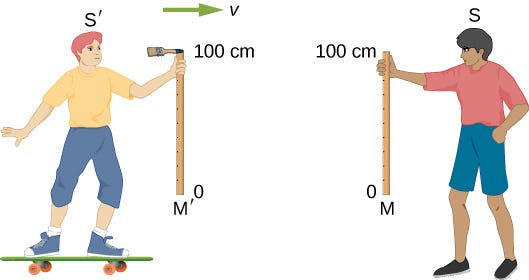
I frequently hear people defending their subjective, feelings-centered worldview by invoking Einstein’s theory of special relativity. According to the theory, certain aspects of reality appear differently to different observers - i.e., observers traveling at different speeds. A meter stick, for example, appears shorter to an observer in motion than it does to an observer at rest with respect to the meter stick.
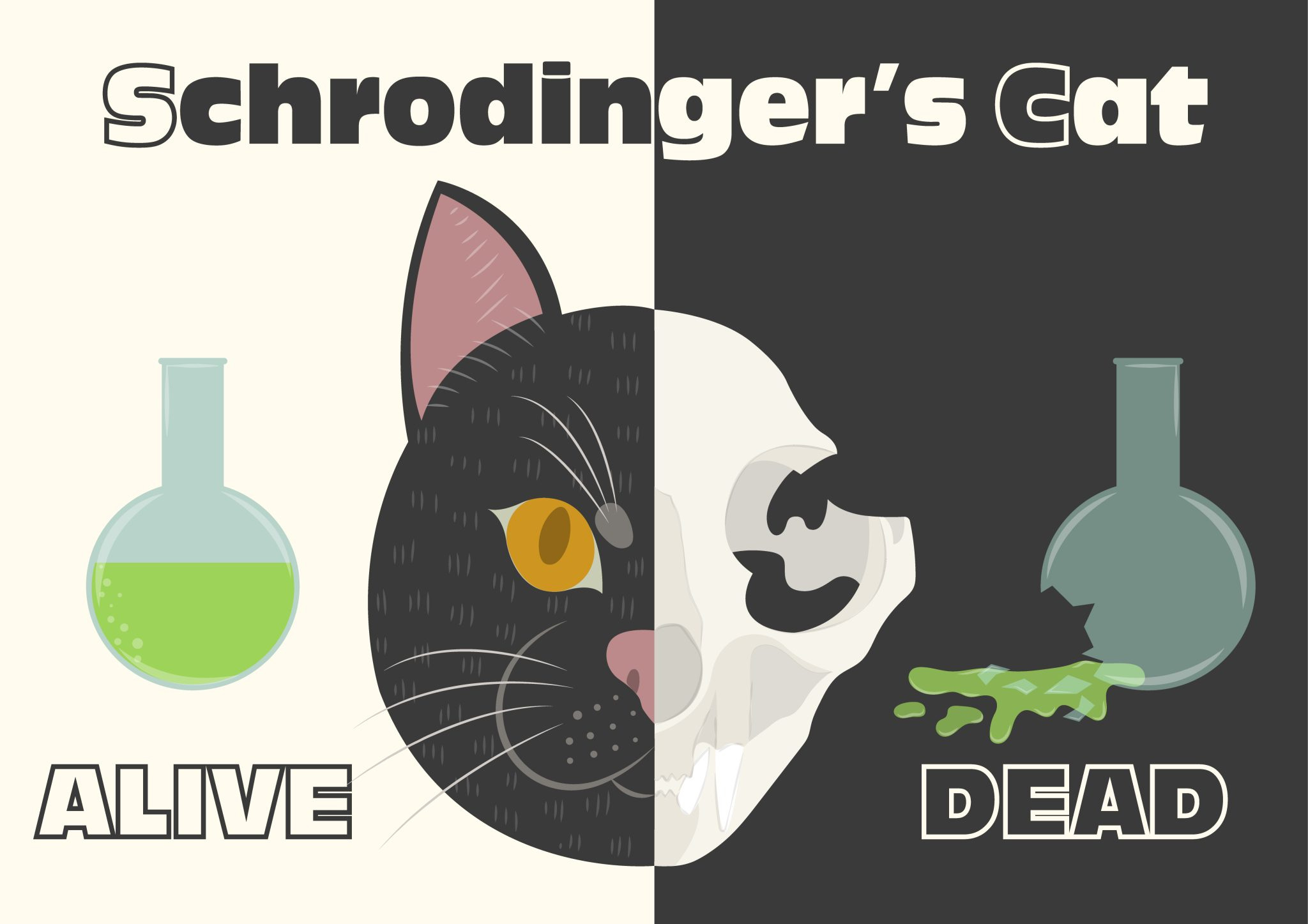
I also hear people invoking quantum theory to defend their subjective, emotion-centered worldview. According to the theory, different observers may legitimately disagree about what they see. For example, about whether Schrödinger’s cat is dead or alive.
Given all that, it’s easy to see why so many people come to the conclusion that truth is entirely subjective. That your truth isn’t necessarily my truth. That even modern science proves truth is relative.
But that conclusion is seriously mistaken for one, all-important reason.